Loading...
Loading...
Loading...
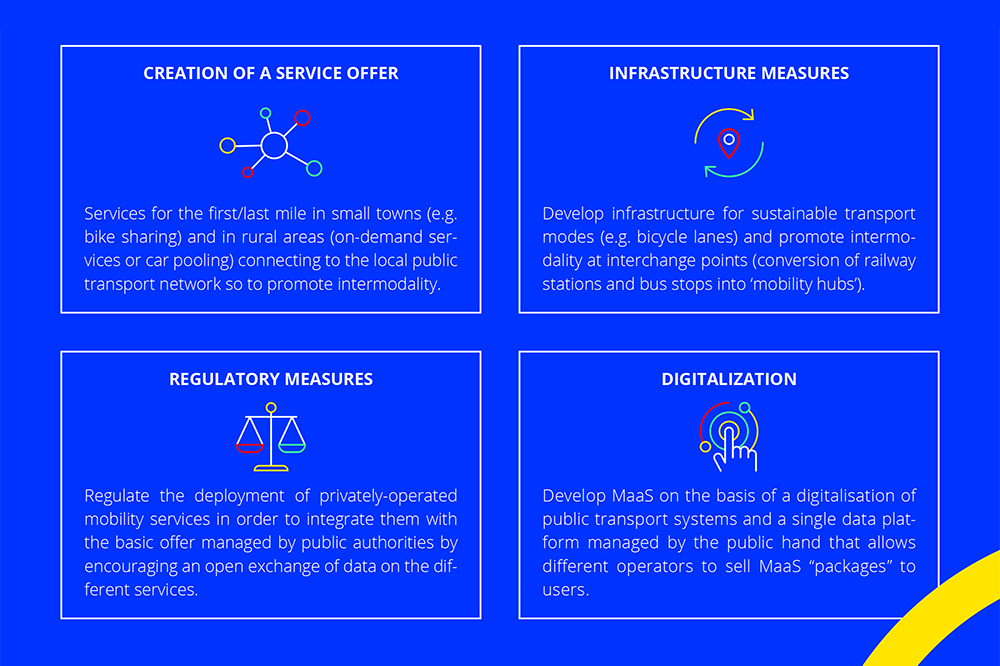
A new concept is emerging worldwide: ‘MaaS’ (Mobility as a Service). The idea is to allow people to access different integrated mobility services on demand through a unique app, and to choose the most appropriate one from time to time. This approach is based on open data integration and supports the development of data-driven mobility solutions.
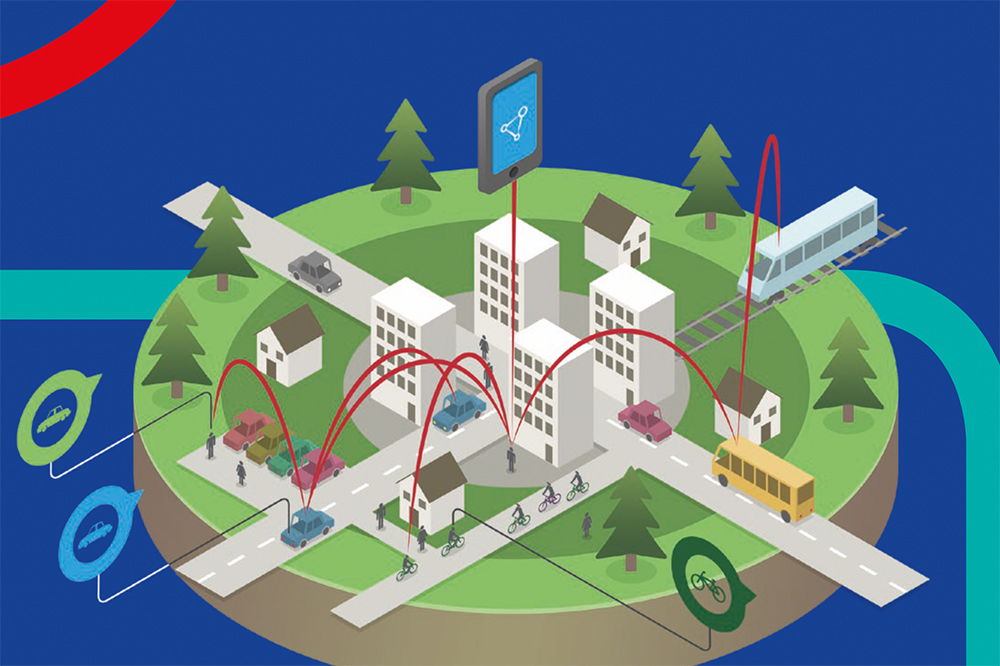
The concept of ‘Mobility as a Service’ (MaaS) has considerable potential in highly urbanised areas, where there is a higher concentration of users. But could it also work in small Alpine communities? And if so, how? These are the questions that the MENTOR project has sought to answer since its launch in late 2018. In order to evaluate the feasibility of MaaS in an Alpine context, the concept has been implemented in two Alpine regions: Merano in the Autonomous Province of Bolzano (Italy) and Brig-Glis in the Canton of Valais (Switzerland). In order to apply the MaaS concept, it is essential that a set of mobility services are strongly integrated around the public transport offer, which forms the backbone of the system. Therefore, the MENTOR project’s pilot activities have focused primarily on exploring the potential of new services that integrate closely with public transport and are supported by mobility APIs and real-time open data
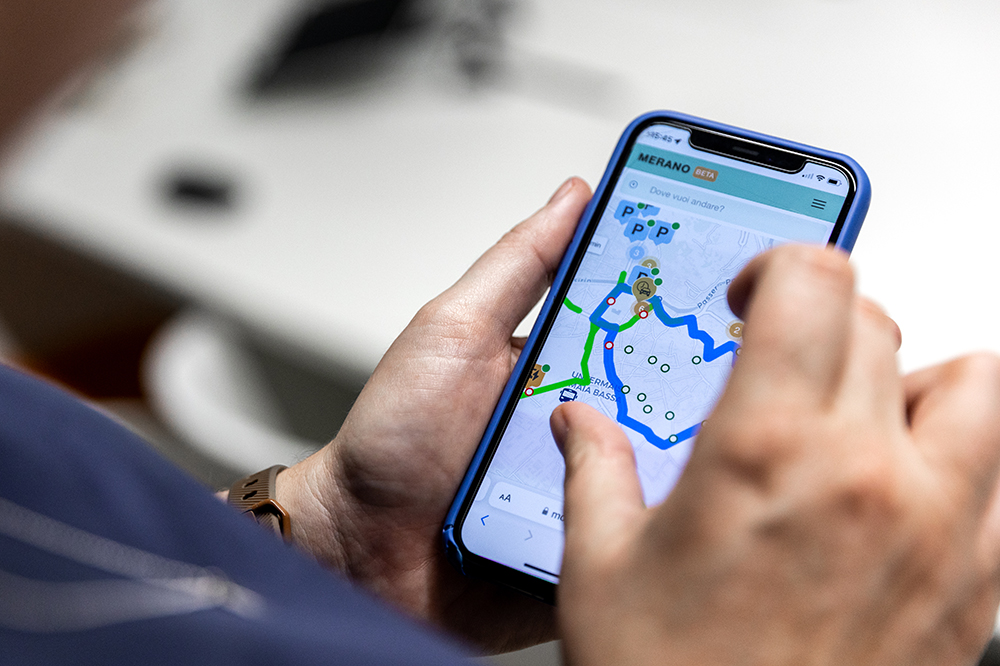
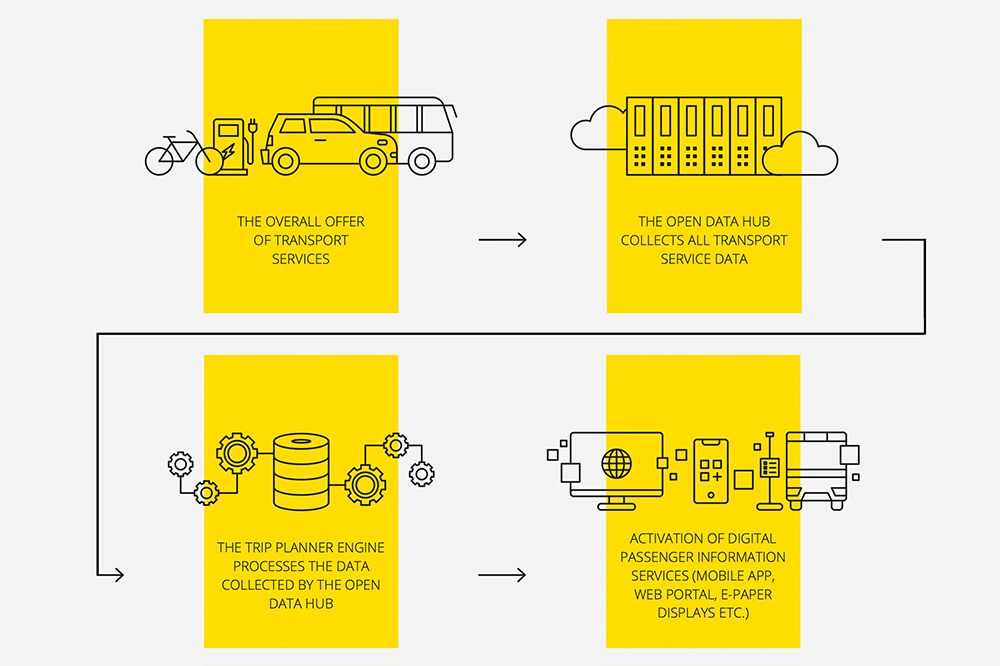
All these services have been technologically connected to the Open Data Hub. Through a partnership between NOI Techpark and OpenMove, a cutting-edge digital solution has been developed, enabling the calculation of trip plans by integrating real-time data from all accessible mobility services using mobility data spaces. This advanced application is available at mobility.meran.eu.
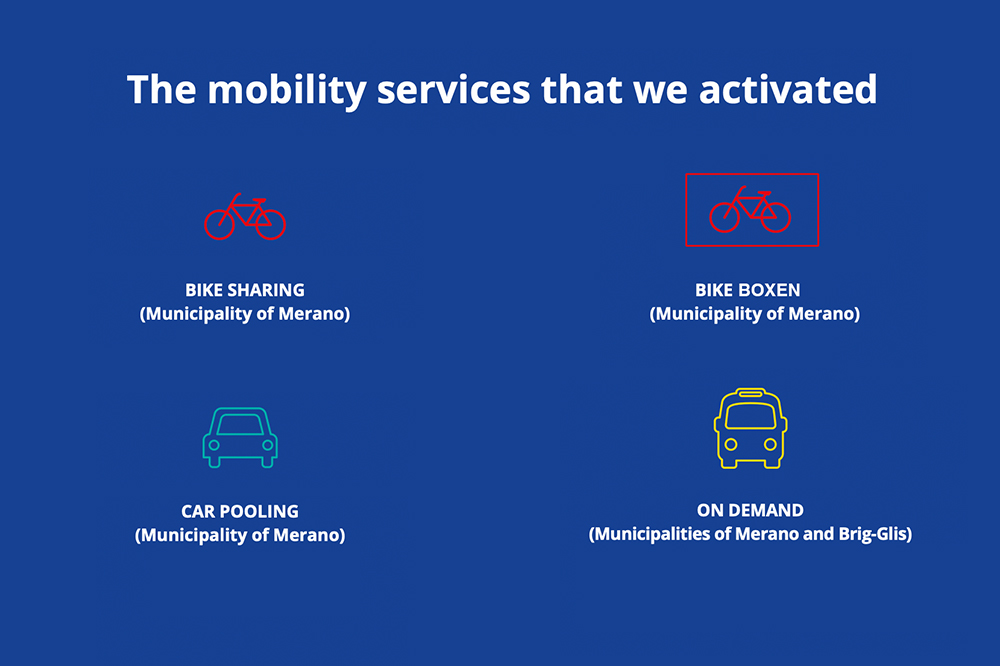
The pilot mobility services tested in the MENTOR project are
→ Bike Sharing (Municipality of Merano): Free rental of traditional pedal bikes
→ Bike Boxen (Municipality of Merano): Safe bicycle storage stations
→ Car Pooling (Municipality of Merano): Shared use of a car by people driving the same route
→ On-demand (Municipalities of Merano and Brig-Glis): Demand-responsive buses, available in areas and at times of day with less public transport availability.
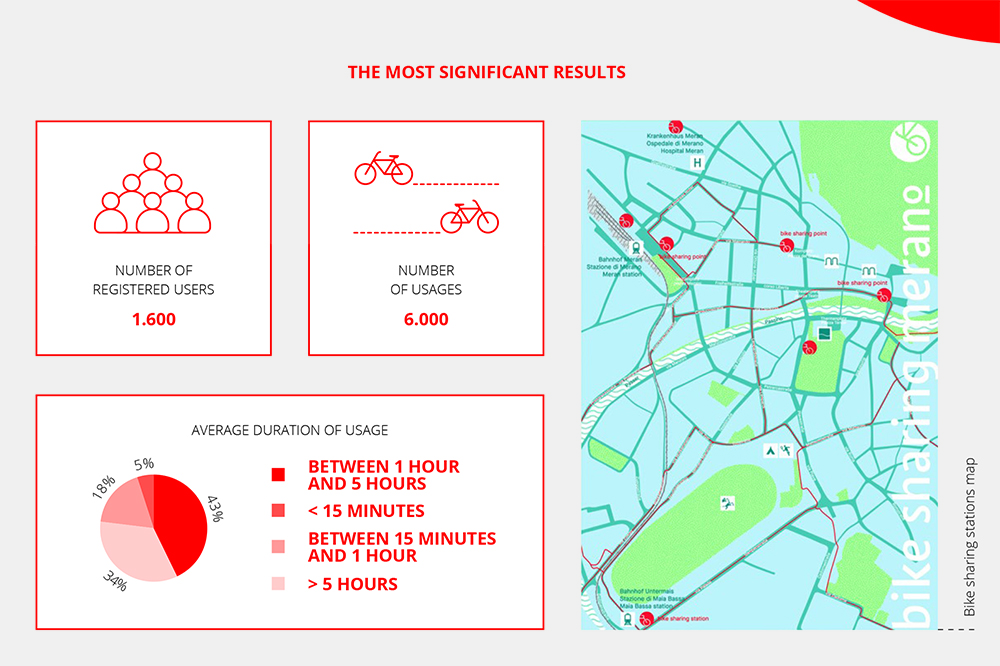
The test phase showed that a bike-sharing service could be useful in a small alpine town with a high cycling rate. However, to be successful, the service must meet specific mobility demands, such as providing a link between the city centre and the train station, and must complement public transport. A potential challenge for future expansion could be to promote the service in more outlying areas of the city (or even in neighbouring municipalities) by using electric bikes to facilitate longer journeys and support mobility solutions based on open data.

Carpooling is the concept of sharing private cars, connecting people who need a ride with those who can offer one. Although it has the potential to reduce individual car use, organising it effectively can be complex. Thanks to the project, a technologically advanced solution has been developed in collaboration with the company Ummadum that aims to promote local commerce through a system of incentives. Supported by mobility APIs and open data integration, the system promotes smarter, more sustainable urban mobility. Due to the pandemic, a full trial of the new system was not possible and it could only be launched in the final months of the project.
Although the pandemic severely limited the scope of the project, local companies have shown strong interest in testing effective solutions for promoting carpooling in the post-Covid era. This bodes well for the future expansion of the service. The challenge will be to encourage people who usually drive to rely more on public transport and other mobility options, particularly by using mobility solutions powered by open data to combine various services for a single trip.
Although the pandemic severely limited the scope of the project, local companies have shown strong interest in testing effective solutions for promoting carpooling in the post-Covid era. This bodes well for the future expansion of the service. The challenge will be to encourage people who usually drive to rely more on public transport and other mobility options, particularly by using mobility solutions powered by open data to combine various services for a single trip.
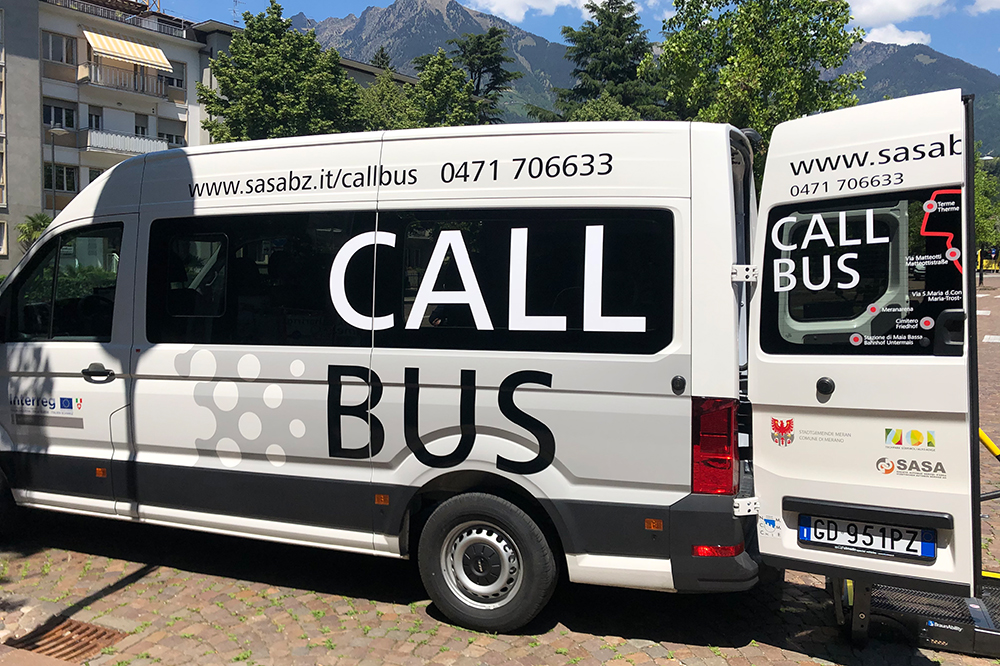
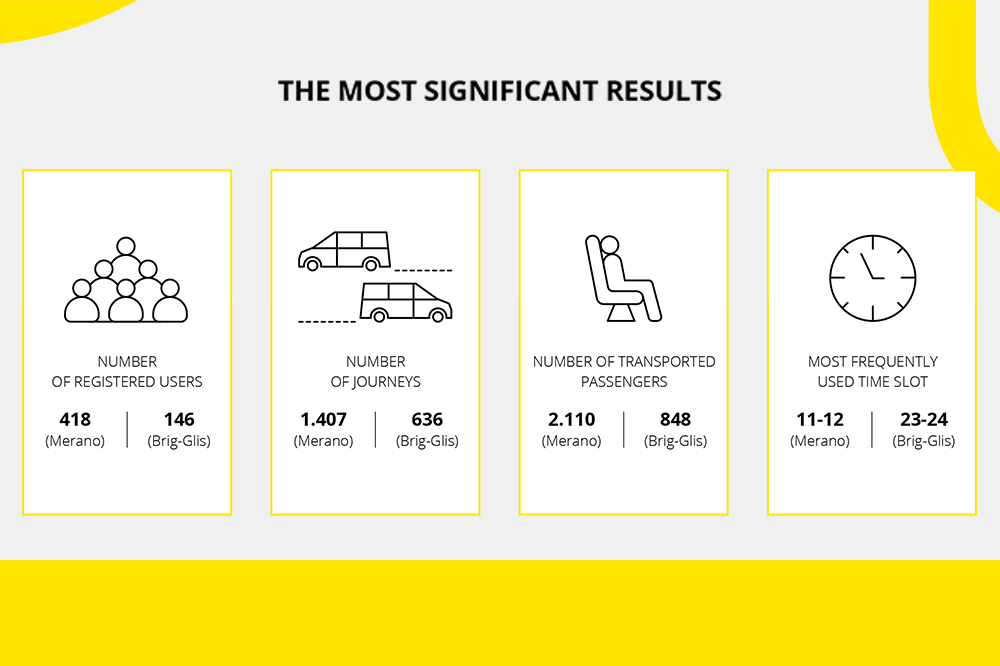
The pilot phase confirmed that new on-demand services can be an essential addition to public transport, even in a rural alpine context. These services can effectively link the start and end points of a journey (e.g. homes or tourist attractions) with the public transport network. Supported by real-time open data and mobility data spaces, these flexible systems can enhance local transport connectivity. Nevertheless, new and more extensive pilots are needed to confirm this approach, particularly with regard to the economic sustainability in relation to the actual demand for mobility that the service could satisfy.
In the future, the advancement of on-demand services will be characterised by innovative and revolutionary technology: autonomous, self-driving shuttles. Public demonstrations of this new technology were conducted in Brig-Glis and Merano. In Merano, history was made when a self-driving vehicle with public access was tested on public roads for the first time in Italy. The electric vehicle can ‘read’ the route safely using intelligent sensors and real-time data access via the Open Data Hub. At the end of November 2019, the shuttle was available to interested parties for a roughly 10-minute ride around the city centre from 9 a.m. to 5 p.m. for an entire week. Each run transported 12 people, plus two technicians: one to intervene if necessary and the other to explain the vehicle’s functionality to passengers
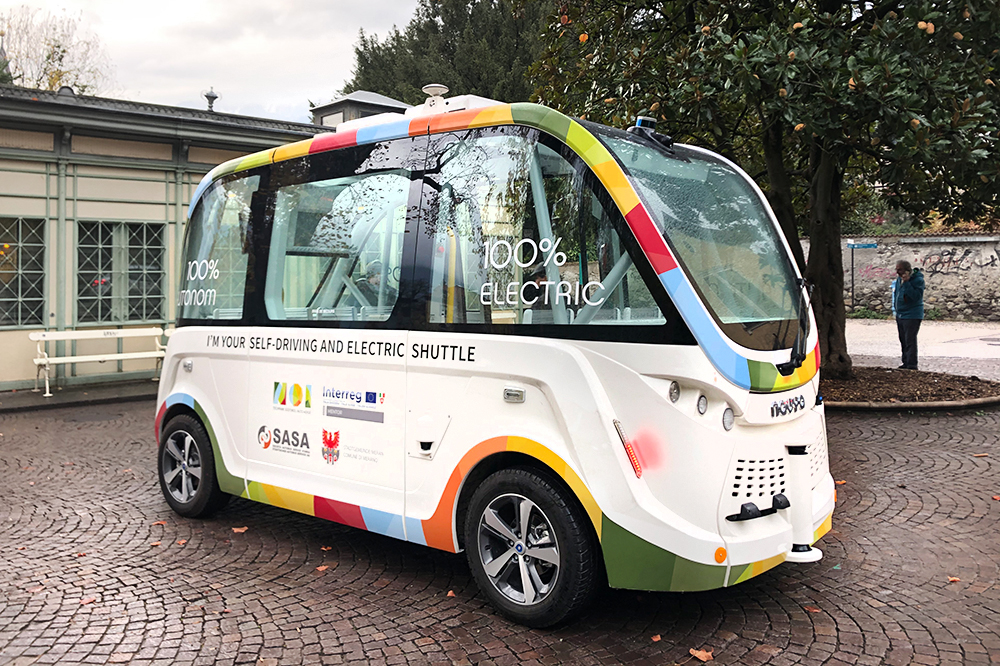
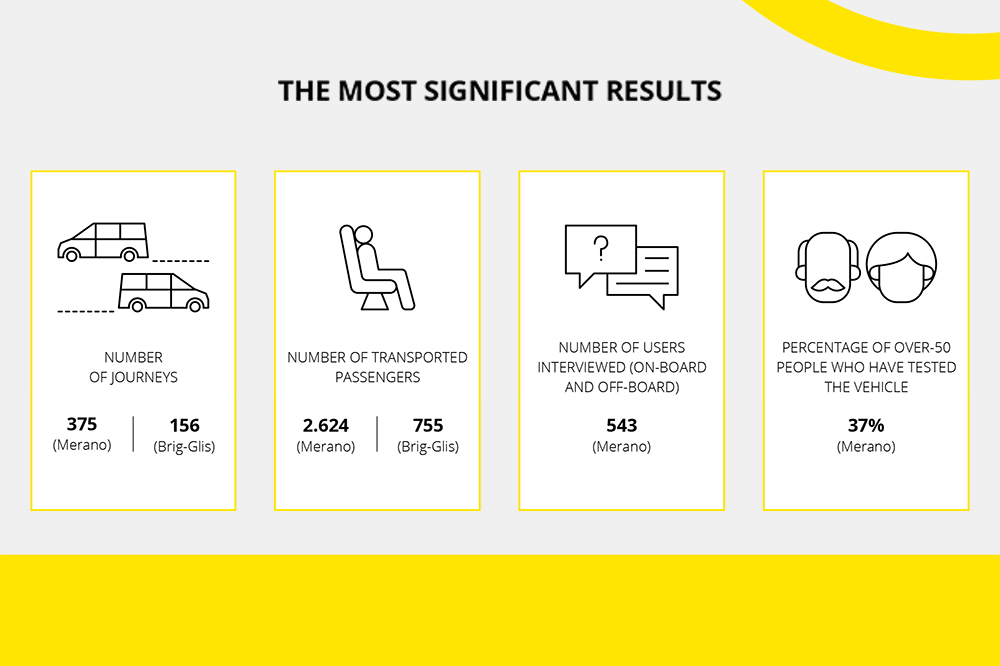
These demonstrations have shown that self-driving shuttles are technologically mature and ready to provide transport services in specific, controlled contexts. However, further pilot projects are needed to advance the technology and explore its potential in rural and mountainous areas like those found in the Alps. Real-world data pilots of this type are important for evaluating smart mobility in low-density areas. While users appear willing to use this type of vehicle, it is necessary to properly engage them in these projects. Prior to testing the service, 45% of users in Merano expressed low confidence in the technology. This figure decreased to 5% after they had tried it out.
Developing sustainable MaaS in a rural/alpine context requires convincing private car drivers to adopt a new mobility paradigm, prioritizing the reliability of services over driving speed and supporting data-driven mobility solutions based on open data integration.